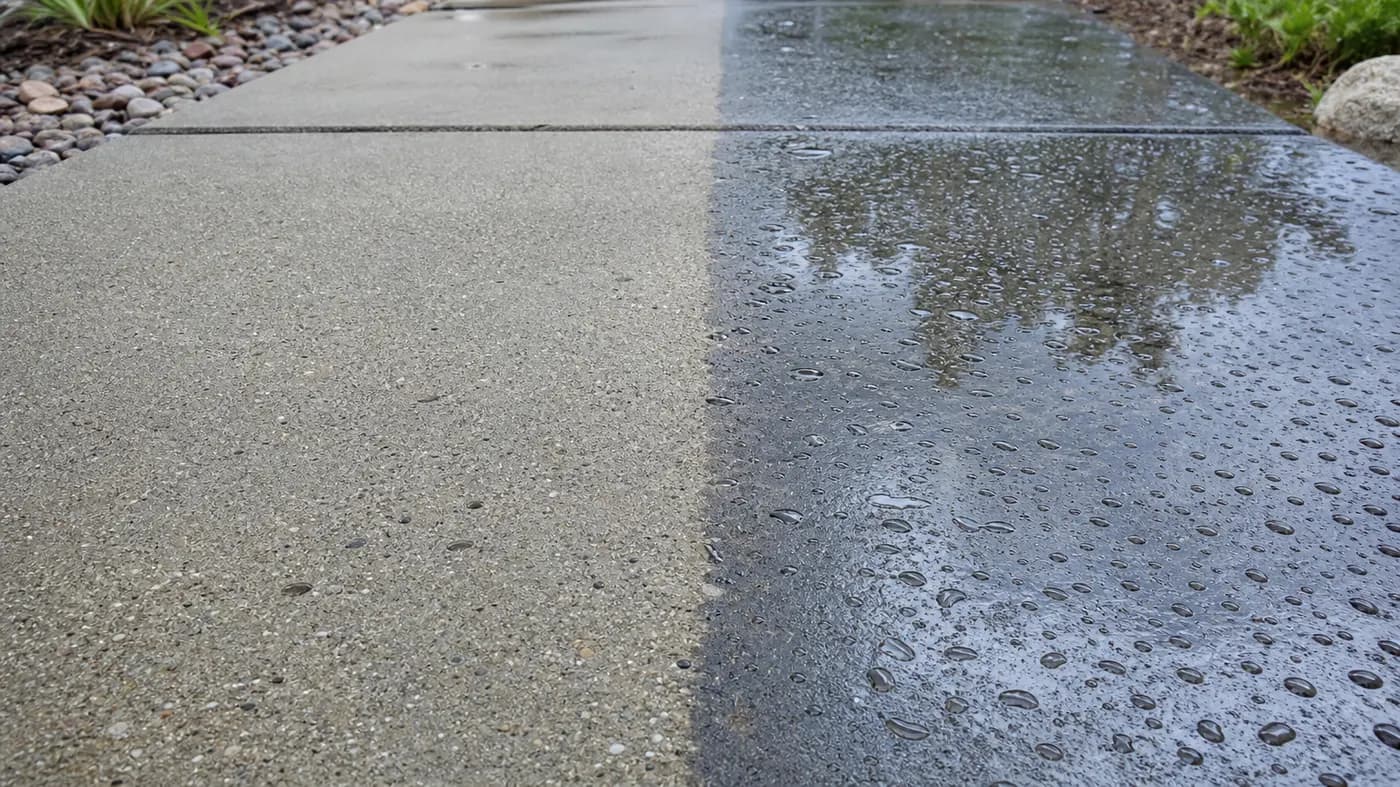
What sealing does
Concrete is porous. A sealer reduces how much water, oil and dirt it absorbs, makes spills and stains easier to clean, and on colored or stamped work it protects the color and deepens it. A sealer is not a structural repair. It will not fix cracks, scaling or a slab that has moved, and it will not turn a failing surface into a good one.
Sealing also helps cracks stay cleaner when they are filled, which is why it often comes after concrete repair or concrete resurfacing. If you are looking at an overlay job anyway, ask the contractor to include the sealer.
Sealer types
| Type | How it works | Typical use |
|---|---|---|
| Penetrating (silane or siloxane) | Soaks in and repels water without changing the look much | Plain broom-finish driveways and walkways |
| Acrylic film-forming | Leaves a surface film; enhances color; can be matte or glossy | Stamped and colored concrete, patios |
| Polyurethane or epoxy coatings | Thicker, harder film | Garage floors and some high-wear surfaces |
Film-forming sealers can get slippery when wet, so ask about anti-slip additives for pool decks, steps and shaded areas. A penetrating sealer is a common choice when you want the slab to look unchanged. A contractor will recommend a product based on the slab, how it is used and how much sun it gets.
Typical sealing cost (national ranges)
Sacramento-specific sealing prices are not published in any source we could verify. These are typical national ranges. Local quotes will vary with slab size, surface condition and product.
| Item | Typical national range |
|---|---|
| Sealing with labor, average | $1.35–$2.50 per sq ft |
| Sealer materials alone | $0.10–$0.75 per sq ft |
| Epoxy coatings | $3–$7 per sq ft |
Cleaning, stain removal and crack filling before the sealer are common add-ons. A job with a lot of prep costs more than a clean slab that only needs a coat.
Sealing in Sacramento heat
Sacramento's normal July high is about 93–94°F, with about 20+ days a year at 100°F or hotter. Hot, sunny slabs can cause sealer to dry too fast, trapping bubbles or leaving a cloudy film. Contractors commonly seal in cooler parts of the day and avoid applying to a surface that is hot to the touch. Annual rainfall is about 18.5 inches, so water exposure is real but seasonal. Ask a contractor how they time the work around the weather.
How often to reseal depends on the product, traffic and sun. Film-forming sealers on sunny patios wear faster than penetrating sealers on shaded walkways. A contractor can tell you what to expect for the product they apply.
Which surfaces benefit most
Stamped and colored concrete
Sealer is part of the system, not an extra. It protects the color and the texture. See stamped concrete and decorative concrete.
Exposed aggregate
Sealing brings out the stone color and helps keep the pebbles locked in. See exposed aggregate concrete.
Plain driveways and patios
A penetrating sealer helps with oil and water staining. It is optional on plain gray concrete, but worthwhile on a light slab that sees cars or lawn furniture.
Questions to ask before you book
- What sealer will you use, and is it penetrating or film-forming?
- How will the slab be cleaned first, and will stains be treated?
- Is the finish matte or glossy, and will it be slippery when wet?
- How long until we can walk on it, and how long until cars can use it?
- When should it be resealed, and what does that visit cost?
- What does the quote cover if the sealer peels, turns cloudy or wears unevenly?
Sealing is also a good time to look at the rest of the slab. If joints are open or cracks are spreading, ask whether concrete leveling or repair belongs on the same visit.
Common sealing mistakes
- Sealing a dirty slab. Oil, mildew and old sealer left on the surface get locked under the new coat and show through.
- Applying too thick. A heavy coat of film-forming sealer can turn white or cloudy, especially in heat or on damp concrete.
- Sealing damp concrete. Moisture trapped under the film can blush white. A slab that has just been resurfaced or washed needs time to dry first.
- Choosing gloss for a wet area. A glossy finish near a pool or on steps is slippery. Ask about additives that add traction.
- Skipping repairs first. Open joints and cracks let water under the sealer. Fill them before the coat goes on.
Fresh concrete is a separate case. New flatwork is normally kept moist for about 7 days as it cures, and a contractor decides when it is ready for sealer, so follow their schedule. See concrete patios for how a new patio is finished.
How the referral works
Sacramento Crest Concrete does not seal anything and does not quote or contract. Send a request with the surface and size, and it passes your contact information to independent contractors in your area. A contractor can visit to measure and quote. You contract with and pay the contractor directly.
Check the license at cslb.ca.gov before you sign. For a small job, California treats a home improvement down payment as capped at $1,000 or 10 percent of the contract, whichever is less. More answers are in the FAQ.
Main guide: concrete contractors in Sacramento.