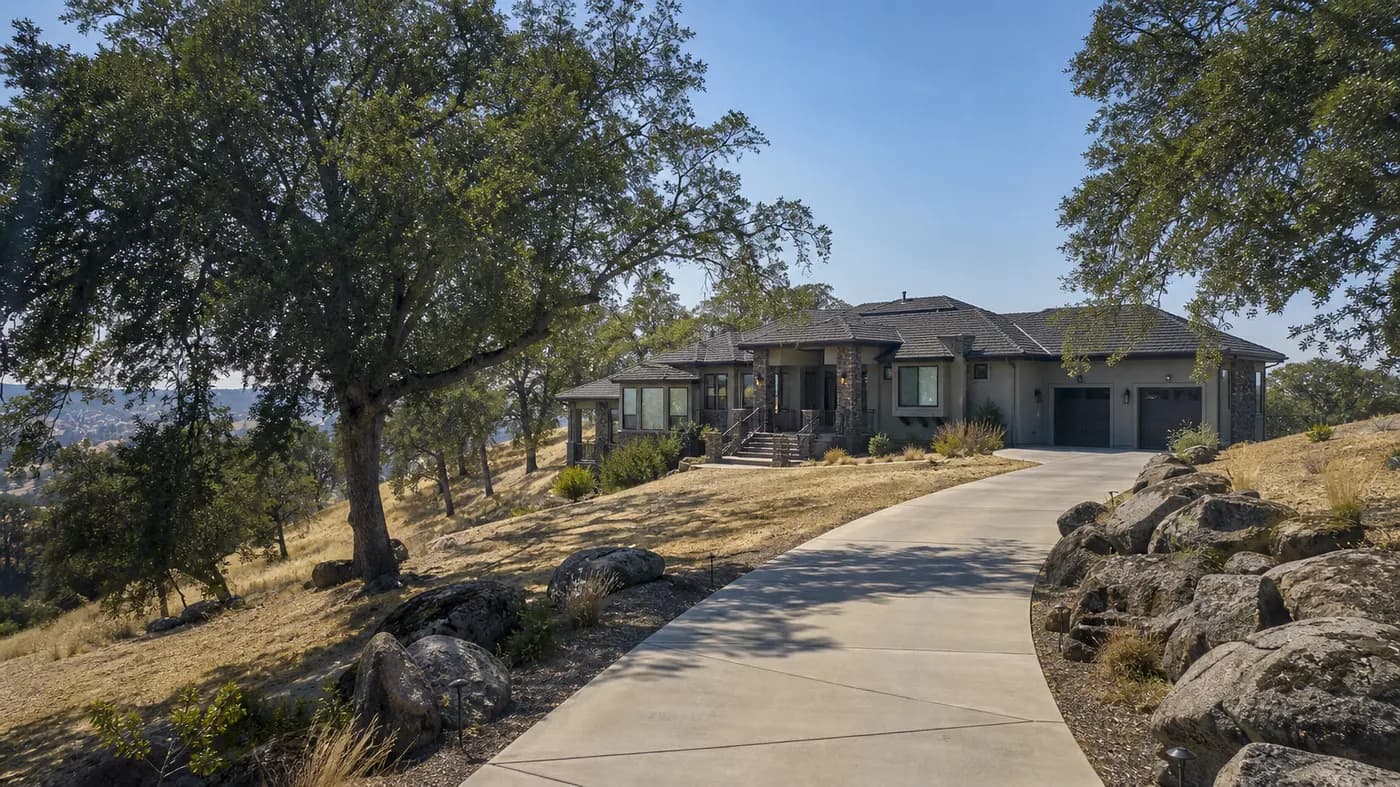
A master-planned community from the early 2000s
Developer Allan Lindsey began the El Dorado Hills master plan in the early 1960s, covering about 11,000 acres. The Census Bureau's 2020-2024 American Community Survey puts the median year built for El Dorado Hills at 2002, so most homes here are in their second or third decade. Original driveways, walkways and patios from that period are reaching the age where settling, surface wear and cracking show up, which is where concrete repair, sealing and resurfacing enter the conversation, with replacement for slabs past saving.
Foothill soil is not valley soil
Foothill soils around El Dorado Hills, Folsom east and Granite Bay are typically described as clay, decomposed granite, serpentine, decomposed schist or very shallow rocky soils. That mix creates two separate concerns for flatwork.
Rocky and shallow ground
Shallow rock can make excavation for footings and slab bases slower and more specific to each lot. Ask the contractor what they expect to find, how they will deal with it, and whether that could change the price after the first dig.
Clay that moves
Clay pockets in the foothills can swell and shrink with moisture, and expansive clays are noted in the eastern part of Sacramento County next door. Prepared subgrade and base rock under the slab, plus control joints at 24 to 36 times the slab thickness (about 8 to 12 feet for a 4-inch slab), are how contractors manage that movement. We have no El Dorado Hills specific soil report, so ask the contractor to explain what they plan for your lot.
Sloped driveways and retaining walls
Hillside lots bring jobs that flat valley neighborhoods rarely have: a steep concrete driveway with a textured finish, a tiered retaining wall holding a back slope, and steps or paths that connect levels. Drainage is part of the design, with gravel and drain pipe at the base of a wall so water does not build up behind it.
On permits, the California Building Code exempts retaining walls not over 4 feet from the bottom of the footing to the top, unless they support a surcharge. Anything taller, or any wall holding a driveway or a structure above it, is outside the exemption. El Dorado Hills is unincorporated El Dorado County, and we could not confirm county-specific flatwork or wall rules, so confirm with El Dorado County before you plan a wall or a driveway tie-in to a county road.
Typical national ranges, not local quotes: concrete retaining walls run about $20 to $60 per square foot of wall face, and plain driveways about $6 to $12 per square foot installed. Slopes, access and rock removal are the things that move a quote.
Outdoor living jobs that fit the area
- Stamped concrete patios and courtyards in patterns that suit the landscape
- Pool decks with a textured, slip-resistant surface (July highs run about 93 to 94 F here and in Sacramento, so surface heat is worth asking about)
- Exposed aggregate walkways, which hide dirt and dry-grass dust well
- Pads for outdoor kitchens, spas and sheds
Send your request through the contact form. It costs nothing, and a licensed contractor can visit to measure and quote. Before signing, verify the license at cslb.ca.gov and remember that a home improvement down payment is capped at $1,000 or 10 percent, whichever is less.
What a written quote should include
- Square footage, thickness, finish and the base material under the slab, listed separately from removal and hauling.
- How rock or unexpected ground conditions will be handled and whether they change the price.
- Drainage details for any wall or sloped pad, and who pulls any permit.
You contract with and pay the contractor directly. Sacramento Crest Concrete does not quote, take payment or warrant the work.
Main guide: concrete contractors in Sacramento.