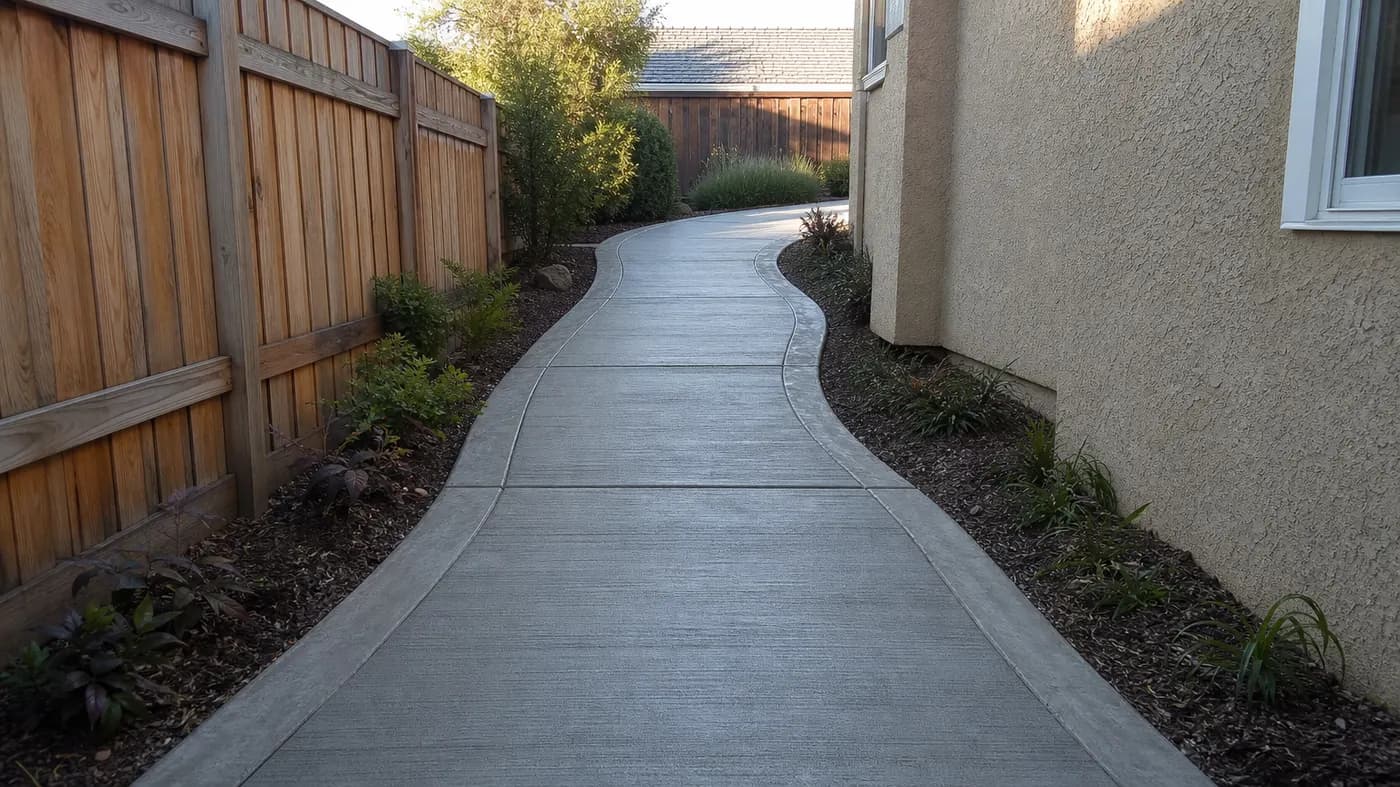
Concrete in Citrus Heights tract homes
Citrus Heights incorporated on January 1, 1997, but most of its housing came earlier, mainly 1960s to 1980s single-family tracts. Slabs of that age are 40 to 60 years old. Common signs: driveways cracked into sections, walkways with trip edges where one panel has sunk, patios that have lost their finish, and older flatwork with root damage.
A concrete contractor in Citrus Heights is therefore often asked to judge whether to fix or replace. Isolated trip edges are a concrete leveling question. Surface wear can mean resurfacing. Whole-driveway failure means removal and a new concrete driveway.
What the Citrus Heights permit page says
The city's Permit Requirements and Exemptions page lists work that does not need a building permit. Confirm the current page and contact Building and Safety (916-727-4760) with questions.
| Work | Exempt from building permit? | Notes |
|---|---|---|
| Walks and driveways | Yes, if not more than 30 inches above grade | Listed as "platforms, walks, and driveways" |
| Retaining walls | Yes, if not over 4 feet | Measured footing to top of wall |
| Patios | Not listed on the page | Ask the city how it treats an at-grade patio slab |
The page also warns that exempt work may still be subject to Planning setback standards. So a driveway widening that stays within the exemption can still run into a setback rule. See retaining walls for what drives wall height and drainage.
Street-side work and encroachment permits
If your project touches the sidewalk, curb or driveway apron, you are working in the public right-of-way, and the city has an encroachment permit application (updated February 7, 2024, though we did not open it). Ask the contractor whether they will handle the application and when work can start. Do not assume an exemption from a building permit covers right-of-way work; those are separate questions, and the city is the one to answer them.
Jobs that fit Citrus Heights lots
- Walkway and entry upgrades. Replacing a cracked front walk, or adding a concrete step with a handrail where a grade change has worn.
- Patio expansion. Many older tract patios are small. A larger concrete patio usually needs a look at drainage and setbacks first.
- Retaining walls for yard grading. Low walls to level a sloping rear yard, kept under the 4-foot exemption line unless the city says otherwise.
- Sealing and refresh. Sealing can extend the life of concrete that is sound but stained.
National typical ranges are about $6 to $14 per square foot for a walkway and about $5 to $18 per square foot for a patio. Local quotes will differ.
Planning a project around the exemptions
Because the city lists exemptions so clearly, you can plan around them. A walkway or driveway not more than 30 inches above grade, or a retaining wall not over 4 feet, falls outside the building permit requirement, but setbacks still apply and street-side work is a separate matter. If you want a patio, call Building and Safety first, since patios were not listed as exempt on the page we read.
When you talk with contractors, ask them to tell you what they believe the permit situation is and then check it yourself. For a retaining wall near the 4-foot line, ask how the height is measured, because the exemption counts from the bottom of the footing to the top of the wall, not from the ground you see. For drainage and wall basics, see our retaining walls page, and for cost framing see the concrete cost guide.
How the referral works
Use the contact page to describe the work. We pass your information to independent, licensed concrete contractors, who can visit to measure and quote. You contract with and pay them directly, and you should check each license at cslb.ca.gov first.
Main guide: concrete contractors in Sacramento.